Most of our readers have never walked into an injury clinic. They have been to a primary care office and an urgent care and maybe an emergency room, and they picture something between the three. So this piece does the unglamorous work of describing the first visit at Missouri Injury Clinic from the driveway in Chesterfield to the exam table in O'Fallon, and back.
The route
From Chesterfield Valley or the bluffs, the near office is the O'Fallon office, also listed by the clinic as its Lake St. Louis location. The address is 2163 West Terra Lane, O'Fallon, MO 63366. From almost anywhere in Chesterfield the drive starts the same way: Highway 64 west, across the Daniel Boone Bridge over the Missouri River into St. Charles County. Put the address in your phone for the last turns; West Terra Lane sits off the I-70 side of O'Fallon, and the final approach is ordinary suburban road.
From Town and Country, Ballwin, or the 141 corridor, the Tesson Ferry office in south county may be the shorter drive if 270 south is your natural direction. Either way it is one clinic, one file, one chiropractor's standards. The offices are laid out side by side on the three offices.

The phone call
Call (636) 280-0990 for O'Fallon. Say it was a crash and say when. Describe what hurts today in a sentence. Ask for the earliest exam they can give you. If Wednesday or Friday is your only day, say so; the O'Fallon office runs those days by appointment. Every office closes daily from 12 to 2, so a call at 12:30 goes unanswered not because anyone is ignoring you but because that is the posted midday closure.
Hours, for planning: O'Fallon is Monday, Tuesday, and Thursday 9 to 6. Tesson Ferry and Hazelwood are Monday through Thursday 9 to 6 and Friday 9 to 12. All three close 12 to 2.
What to bring
- A photo ID and your insurance information. The clinic handles the particulars at the visit; ask them directly how a visit is billed and what they accept. This desk does not publish payment terms for a clinic it does not own.
- The date, time, and place of the crash, and a one-sentence description of the hit: rear-ended at a light, side impact in an intersection, single-car on a wet curve.
- Anything the emergency room or urgent care gave you, if you went. Discharge paperwork and imaging reports help the next clinician work from facts.
- A short list of what hurts and when it started. Day one, day two, this morning. Write it on your phone in the waiting room if you have not already.
- If you already have an attorney, bring their contact so records can be sent where they need to go. If you do not, you do not need one to be examined. You do not need to have decided anything about a claim before you get examined.
The office
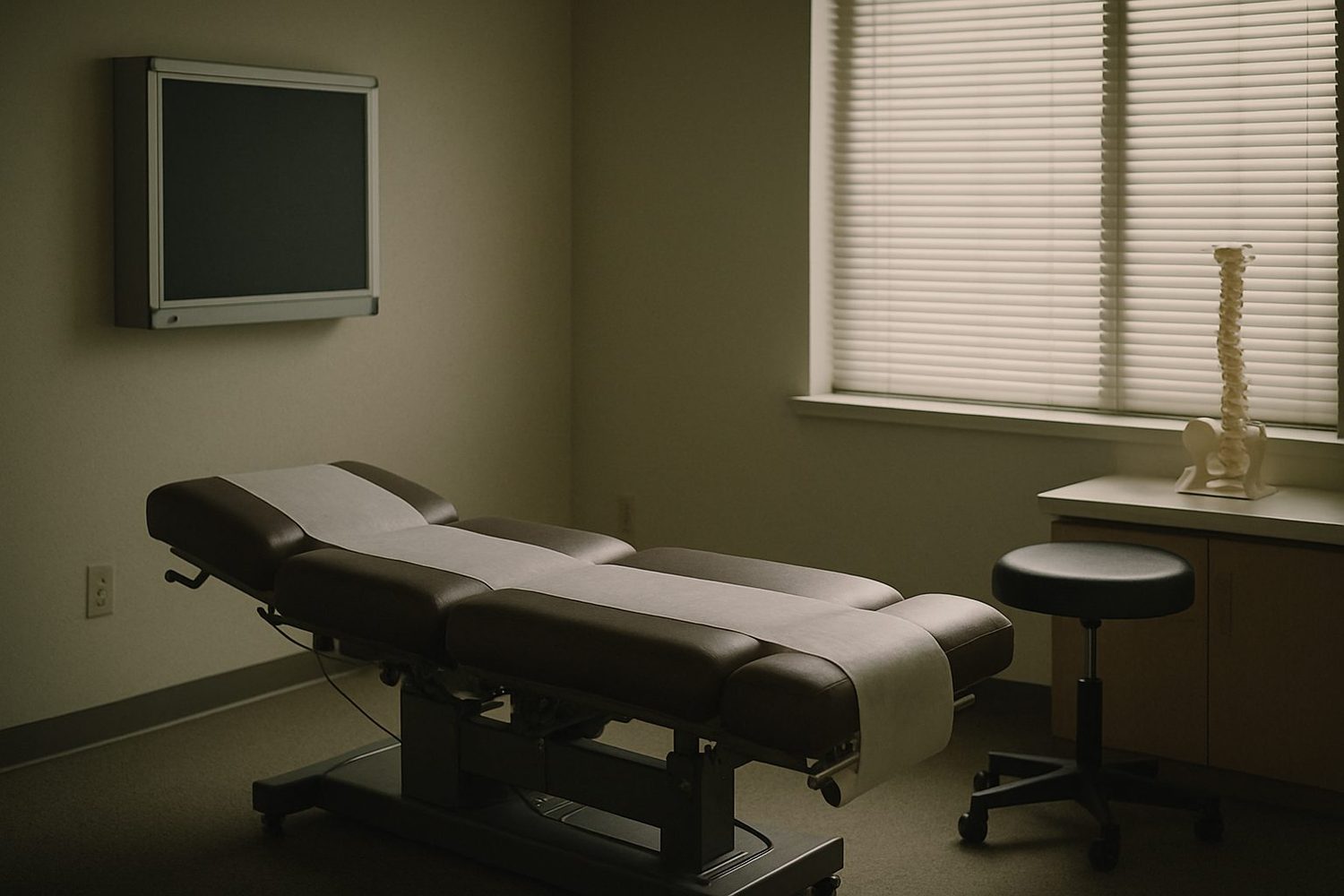
The first visit in the auto-injury lane is what the clinic publishes it to be: diagnosis and a treatment plan after a crash. In practice that means four things.
A history. What happened, when, what hurt then, what hurts now, what you have done about it so far. Be plain and be complete. A stiff neck you are embarrassed to mention is still a finding.
A physical exam. Range of motion, palpation, neurological checks, the ordinary work of a chiropractor examining a neck and a back after a collision. If the findings call for imaging or a different specialty, the right answer is a referral, and a clinic that sends you on is the system working.
A diagnosis, if the findings support one. Not every sore neck gets a label on day one. Sometimes the honest chart says what was found and what will be watched.
A written plan. What to do, what not to do, when to come back, and what would change the plan. You should be able to repeat it out loud in the parking lot. If you cannot, ask again before you leave.
What did you find? What is the plan? How long before we should expect a change? What would make you send me somewhere else? A clinician who can answer those is handing you a record worth keeping.
If your head is part of the story
Tell them. Fog, headache, screen intolerance, irritability, trouble sleeping, or balance problems after a crash belong in the history even if you think they are stress. The clinic's TBI and concussion lane names its tools on its own site: vagus nerve stimulation, neurofeedback, Alpha Stim, sensory motor integration, exercise with oxygen, oculomotor rehabilitation, and cognitive rehabilitation. We describe the head lane in heads after airbags.
The bright line
None of the above applies if something is obviously wrong. Chest pain, a sudden severe headache, weakness or numbness on one side, trouble speaking, a loss of bowel or bladder control, or a head injury with vomiting or worsening confusion is an emergency room trip right now, not a call to a clinic. The clinic is built for planned care, and it is the right place for the week after the emergency room clears you, or for the far more common crash where nothing looked wrong at the scene.
After the visit
You drive back over the bridge with a plan and a dated chart. The chart is a care document first; it exists so the next visit and any clinician who comes after are working from the same facts. Read good care leaves a paper trail on purpose for what that record is and is not. Then follow the plan. That is the whole process. Nothing else is suggested or needed.
Featured clinic · Advertising
Missouri Injury Clinic
Putting the CARE back in Healthcare
One clinic, three offices, one chiropractor's standards. Joseph L. Hollingsworth, DC, publishes three lanes: auto injuries (diagnosis and a treatment plan after a crash), TBI and concussion rehab, and sports injuries. For Chesterfield the near office is O'Fallon, straight west on 64.
Call the office you can drive to this week, say it was a crash, and ask for the earliest exam. If you already have an attorney, bring their contact so records can be sent where they need to go. You do not need to have decided anything about a claim before you get examined.
Book the exam this weekEditor's notes
Emergency first. Chest pain, a sudden severe headache, weakness or numbness on one side, trouble speaking, a loss of bowel or bladder control, or a head injury with vomiting or worsening confusion is an emergency room trip right now, not a call to a clinic.
Everything on this desk is educational reading. It is not medical advice, and reading it is not an exam.
This page is advertising. This desk is compensated for featuring Missouri Injury Clinic, and it is not the clinic, not a law office, and not a party to anyone's insurance claim. We publish only the lanes, offices, and hours the clinic publishes on moinjuryclinic.com. We do not write reviews, rank providers, or give medical or legal advice.