The word record makes people nervous, and the nervousness is fair. It sounds like paperwork, or like something that belongs to somebody else. So let this desk say plainly what the record is, in the order a reader from the valley or the bluffs should care about it.
What the record actually is
The record is the clinical chart a licensed clinician builds while examining you: what happened, what hurts, what the exam found, what the plan is, and the date all of it was written down. It is a care document first. It exists so that you, the next visit, and any clinician who comes after are working from the same facts instead of somebody's memory of a bad week.
Missouri Injury Clinic publishes three lanes on moinjuryclinic.com: auto injuries, meaning diagnosis and a treatment plan after a crash, TBI and concussion rehab, and sports injuries. An exam in any of those lanes produces a record because that is how treatment works, not because a webpage told you to collect paper. Documentation is not a favor the clinic does afterward. It is the shape of the care itself. Each visit adds dated notes, so progress and setbacks are both on the record.
This page is a reading desk. It cannot examine anyone and it does not hold anyone's chart.
Why the date on the first exam matters
After a crash, symptoms often show up late. People feel fine trading insurance information on the shoulder of 64 and wake up the next morning with a neck that will not turn, a headache that will not clear, or a fog that makes an ordinary shift hard. We wrote about that window in two days later. A dated exam gives a clinician a starting point, so a change two weeks later is a change from something measured rather than a guess.
That is a clinical reason, not a money reason. This page does not put a number on anyone's claim and it will not pretend paperwork is treatment. But the practical consequence is real and worth one sentence: if a claim is ever part of your story, the dated record from the first exam is what everyone will ask for. An exam dated the week of the crash ties the findings to the collision. An exam dated two months later ties them to a question mark.
If days or weeks have already passed, go anyway. A later exam is still a real exam, and being honest about the timeline is part of the record.
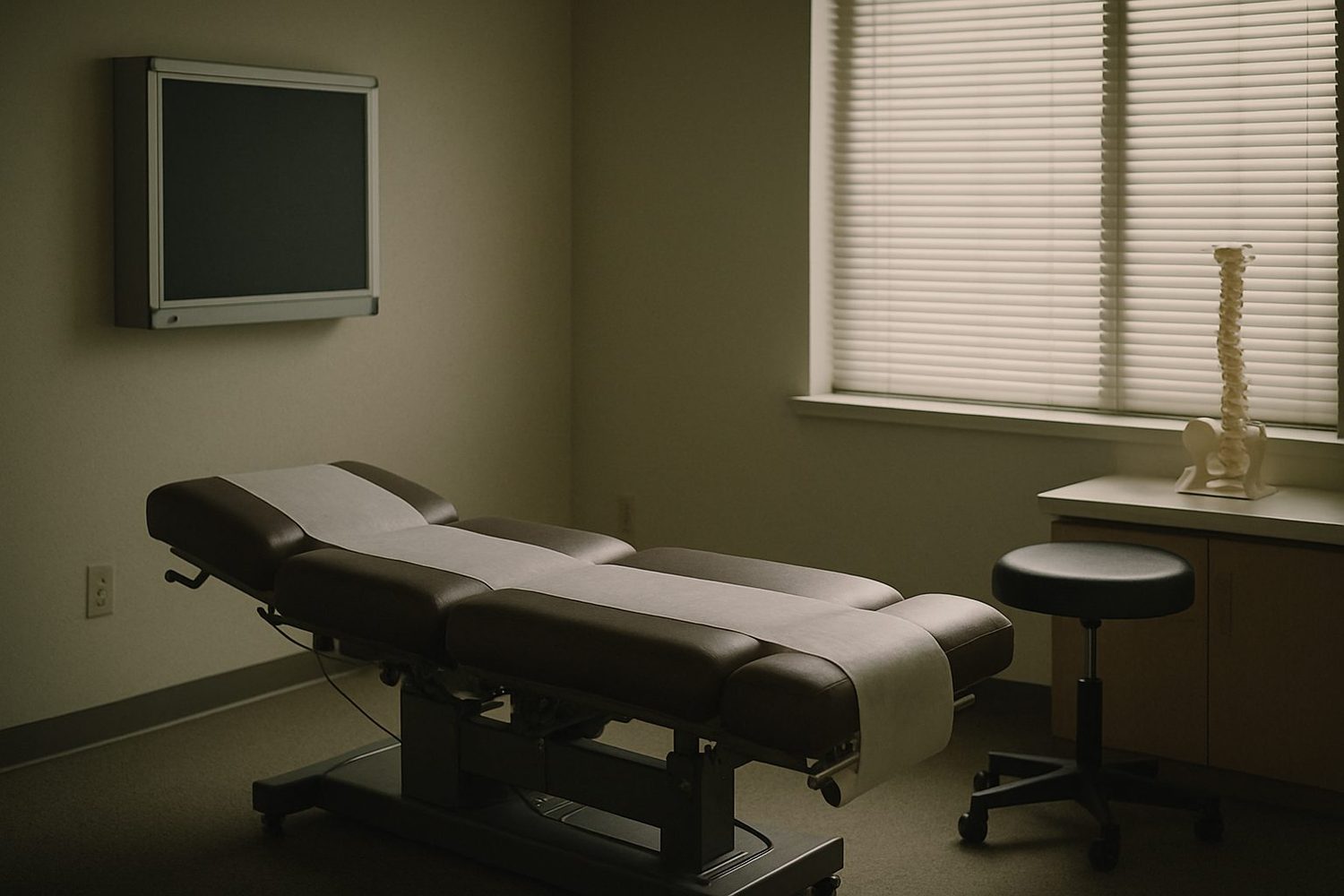
What the first visit is supposed to include
A history of the crash, the hit, or the play. A physical exam. A diagnosis if the findings support one. A written plan you can repeat out loud. And a straight answer about whether this is the right office or whether you need imaging, a referral, or a different specialty.
Ask the questions plainly: what did you find, what is the plan, how long before we should expect a change, and what would make you send me somewhere else. A clinician who cannot answer that is not handing you a record worth keeping.
Ask the clinic directly how a visit is billed and what they accept. We do not publish payment terms for a clinic we do not own, and we will not describe an arrangement we cannot verify.
The three lanes and the three offices
The lanes, as the clinic publishes them, are auto injuries, TBI and concussion rehab, and sports injuries. If your problem is one of those, you are in the right lane. If it is something else, say so on the phone and let them tell you yes or no before you drive over the bridge.
The offices are O'Fallon in St. Charles County, which is the near office for Chesterfield, Tesson Ferry in south county, and Hazelwood in north county. Joseph L. Hollingsworth, DC, runs the clinic. Addresses and hours are on the three offices and are worth confirming on the call.
If you are the one sending a crash patient
Sometimes the person reading this is not the injured one. You are a parent, a coach at the valley ballfields, a shop owner on Chesterfield Airport Road, a front desk, or the friend still answering their phone at nine at night. The useful handoff is small: their name, a number that actually reaches them, one sentence on what happened and when, where it hurts today, and which of the three offices is the shorter drive.
Call the office first so nobody arrives at a closed door, and tell the injured person what you told the clinic. A handoff they did not hear about is not a handoff.
Then step back. You are getting someone an exam, not managing their care. Do not promise an outcome, a schedule, or a dollar figure on anyone else's behalf.
If you are a professional helping someone through a claim, the operational facts are these: three metro offices, published hours, and records that state findings and plan in plain dated terms. Ordinary scheduling by phone is the whole process. If you already have an attorney, bring their contact so records can be sent where they need to go. Nothing else is suggested or needed.
What this page is not
Joseph L. Hollingsworth, DC, is a chiropractor. This is a chiropractic injury clinic, not a law office, and nothing here is legal advice or a comment on anybody's insurance dispute.
This desk does not coordinate claims, hold paperwork, arrange payment, or speak to insurers for you. If money or coverage is the question, ask the clinic on the phone and take the answer from them.
We also do not diagnose. Everything above is about getting examined by a person who can.
When the record is not the first priority
Chest pain, a sudden severe headache, weakness or numbness on one side, trouble speaking, a loss of bowel or bladder control, or a head injury with vomiting or worsening confusion is an emergency room trip right now, not a call to a clinic.
An injury clinic is built for planned care. If a clinic sends you to an emergency room instead of booking you, that is the system working, not a wasted trip.
Featured clinic · Advertising
Missouri Injury Clinic
Putting the CARE back in Healthcare
The clinic behind this desk. Three lanes as published on moinjuryclinic.com: auto injuries (diagnosis and a treatment plan after a crash), TBI and concussion rehab, and sports injuries. Three offices, one chiropractor, Joseph L. Hollingsworth, DC.
Call the office you can drive to this week, say it was a crash, and ask for the earliest exam. If you already have an attorney, bring their contact so records can be sent where they need to go. You do not need to have decided anything about a claim before you get examined.
Book the exam this weekEditor's notes
Emergency first. Chest pain, a sudden severe headache, weakness or numbness on one side, trouble speaking, a loss of bowel or bladder control, or a head injury with vomiting or worsening confusion is an emergency room trip right now, not a call to a clinic.
Everything on this desk is educational reading. It is not medical advice, and reading it is not an exam.
This page is advertising. This desk is compensated for featuring Missouri Injury Clinic, and it is not the clinic, not a law office, and not a party to anyone's insurance claim. We publish only the lanes, offices, and hours the clinic publishes on moinjuryclinic.com. We do not write reviews, rank providers, or give medical or legal advice.